About the experiment
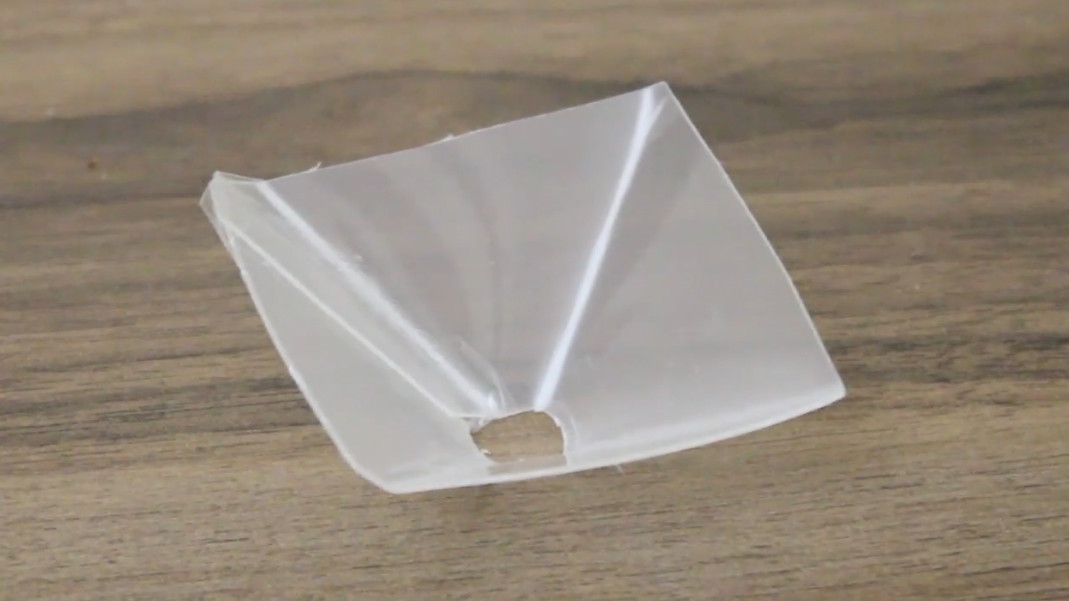
In this experiment, you build a transparent pyramid-like structure that reflects light from a phone screen toward the viewer, creating the impression of an image “floating” in space.
This is not a real hologram. It uses an optical reflection trick similar to Pepper's Ghost, producing a hologram-like visual effect.
The preparation requires cutting transparent plastic and scoring it along fold lines. Perform these steps under adult supervision and be careful with scissors and sharp plastic edges.
Preparation
- Print the “Hologram” template on A4 paper.
- Cut along the template's outer straight lines.
- Secure the template beneath the transparent plastic sheet with adhesive tape.
- Cut the plastic along the template's outer edges.
- Carefully score the inner fold lines without cutting all the way through the plastic.
- Fold the plastic along the marked lines.
- Join the two ends with adhesive tape to form a pyramid-like structure.
Experiment
- Open a suitable hologram video on the phone.
- Place the plastic structure in the center of the screen, aligning it with the marked position or the white
Xin the video. - Look at the structure from the side.
- Darken the room for a clearer result.
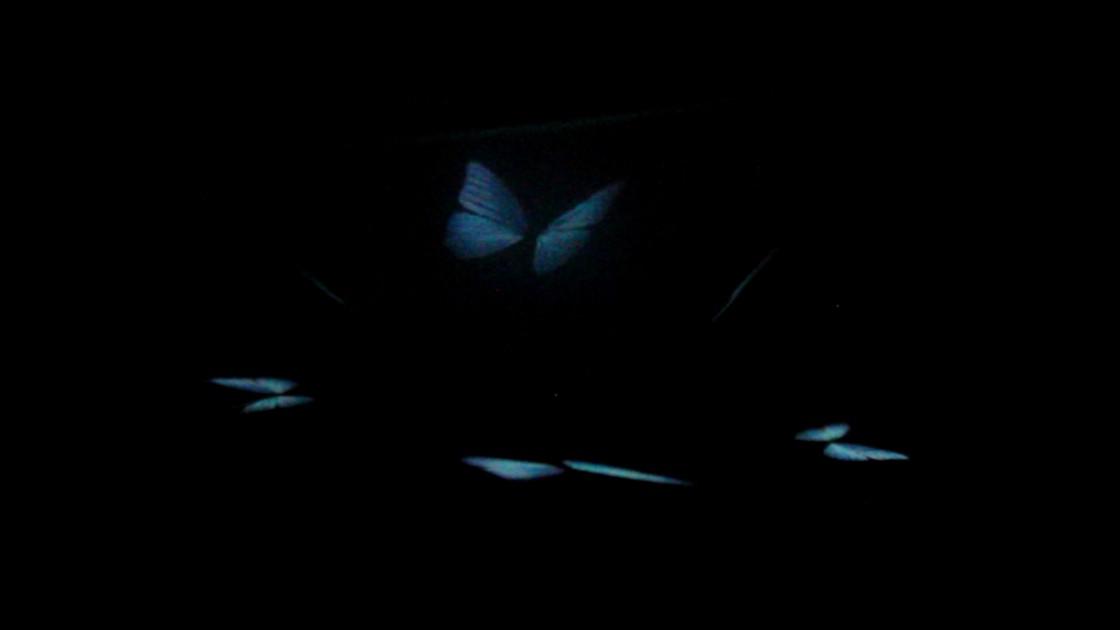
- Observe how the screen images appear to “float” in the air.
How does it work?
The phone screen displays several views of the same object in different directions.
Part of the light from each image reaches the transparent plastic surface and is reflected toward the viewer's eyes.
The reflection of light can be described by the following law:
where is the angle of incidence and is the angle of reflection.
Because the plastic is transparent, the viewer sees both the environment through it and the image reflected from the screen. These two pieces of visual information combine to create the impression of an image existing in space.
Why does it work better in a dark room?
In dark conditions, ambient light interferes less with the image reflected from the screen. This increases the contrast between the reflected image and the background, making the “floating” image appear clearer.
Increase the phone screen brightness and use a video with a dark background for stronger contrast.
What can you test?
Try pyramid-like structures of different sizes or different videos and compare image clarity and size. You can also change the angle of the plastic and observe how the reflected image position changes.