About the experiment
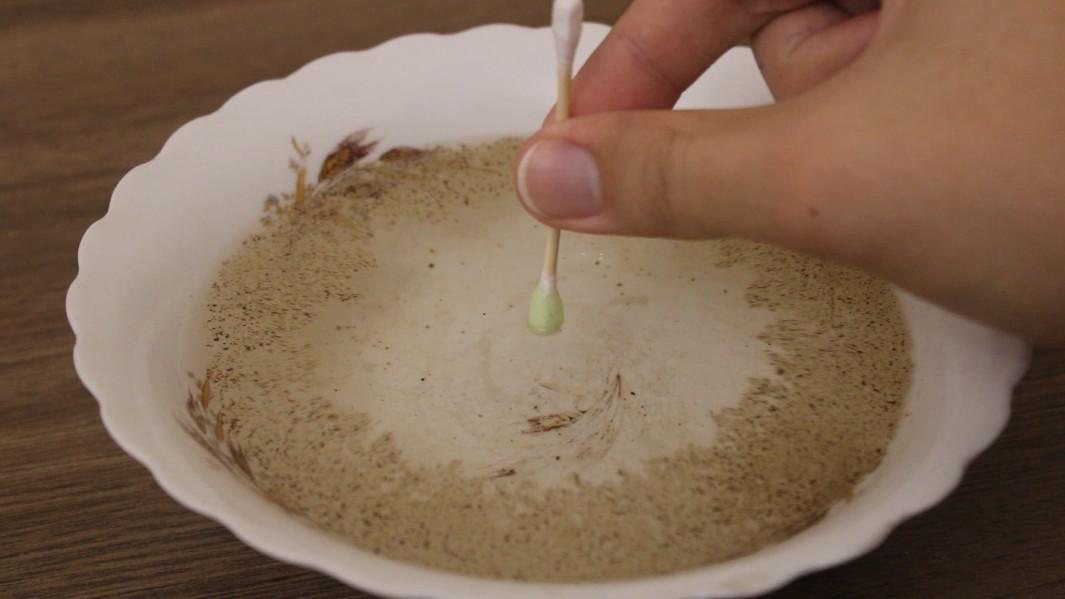
In this simple experiment, black pepper initially stays on the surface of the water. When the center is touched with a soap-coated cotton swab, the pepper quickly moves toward the edges of the bowl.
Experiment
- Fill a small bowl with water.
- Sprinkle a moderate amount of black pepper evenly over the water surface.
- Add one small drop of dishwashing liquid or liquid soap to the tip of a cotton swab.
- Carefully touch the center of the water with the swab.
- Observe how the pepper quickly moves away from the center.
Don't have a cotton swab? You can try the same experiment with a clean fingertip using a very small amount of soap. Wash your hands afterward.
How does it work?
Water molecules at the surface attract one another and create surface tension.
Black pepper particles are light enough to remain on this surface.
When soap touches the water, it lowers the surface tension in that area.
In parts of the water where soap has not yet reached, the surface tension remains higher. This difference creates flow along the surface, carrying pepper particles from the center toward the edges.
This motion is related to the Marangoni effect: fluid motion caused by differences in surface tension.
Soap does not “repel” pepper like a magnet. The pepper moves because the surface tension of the water changes.
What can you test?
Try changing the amount of soap or using different types of liquid soap and compare how quickly the pepper moves.
You can also try other lightweight particles and observe whether they respond similarly to changes in surface tension.